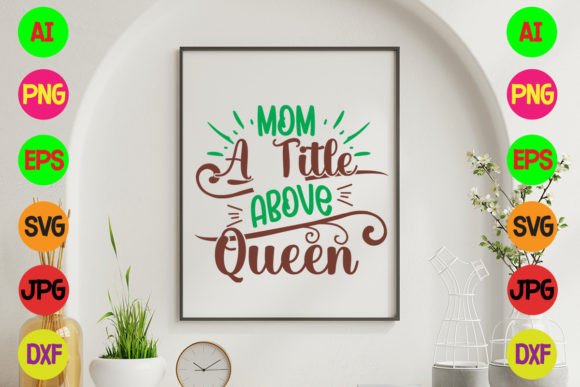
An Honest Designer's Take on the "Mom a Title Above Queen" SVG
When a new embroidery design lands in my library, I don't just look at it on a screen. I immediately start imagining it stitched out on fabric, on a product, and in a real-world context. That’s the lens I’m using to evaluate the "Mom a Title Above Queen" SVG design. As a designer who creates for clients and a reviewer who sees countless files, my first question is always: how will this actually perform?
The First Impression: A Sweet, Modern Statement
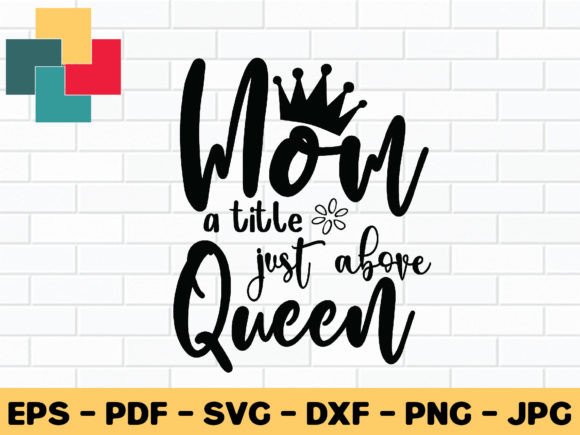
This design has a confident, gentle personality. The "Queen" crown sits neatly above the word "Mom," creating a clear hierarchy that feels both respectful and affectionate. The layout is balanced, not overly ornate, which signals it’s meant for clean, readable embroidery rather than dense decorative work. The mood it creates is one of modern appreciation—it’s sweet without being overly sentimental, and stylish without being trendy. It feels destined for a personalized gift or a boutique product, something where the sentiment is the core value.
I picture it on a simple, high-quality sweatshirt or a canvas tote bag. The design’s shape, with its central text and overhead crown, lends itself to a focal point placement. It wouldn't fight with other elements; it wants to be the star of the piece. This makes it a strong candidate for a standalone embroidery project on custom apparel, where clarity and emotional resonance are key.
Where This Embroidery Design Excels in Real Projects
Let’s walk through a scenario. A client asks for a custom embroidered pillow cover as a Mother’s Day gift. They want something heartfelt but not cliché. This SVG design enters the conversation. The layered vector files provided—SVG, DXF, EPS—mean I can easily scale and prepare it for my embroidery software without losing detail. The included high-resolution PNG is perfect for creating a quick printable mockup to show the client, which is crucial for Etsy sellers and small business owners building trust.
For machine embroidery, the clean lines and distinct elements suggest it would translate well into satin stitch for the lettering and perhaps a mix of fill and satin for the crown details. On projects like:
- Embroidered tote bags: The statement is clear and durable.
- Baby onesies or nursery decor: It offers a sweet "mom" tribute without being overly babyish.
- Kitchen towels or aprons: It personalizes a utilitarian item with warmth.
- Caps or hats: The compact layout could adapt well to a curved surface.
- Ready-to-sell boutique merchandise: It adds perceived value to a plain sweatshirt or blanket.
The design’s appeal lies in its giftability and recognition. A customer sees "Mom a Title Above Queen" and immediately understands the product’s intent. That instant connection boosts buyer engagement for crafters and creative entrepreneurs selling finished products.
Considerations for Stitching Success and Visual Clarity
No design is perfect for every situation, and a professional eye looks for the edges of its usability. The strength of this file is its simplicity, but that also invites careful handling in certain embroidery situations.
First, the small details—like the points of the crown and the interior spaces of the letters—require attention. On highly textured fabrics like some towels or sweaters, fine details might lose clarity. On stretchy fabric, proper stabilizer is non-negotiable to keep the lettering from distorting. I would be cautious using it on very thin fabrics where dense stitch areas could cause puckering, and always test the stitch density settings.
Dark fabric presents a classic challenge. The design, with its positive space, would rely on thread color contrast. Using a light thread on a dark background is a beautiful look, but you must ensure the stitch coverage is solid enough to prevent the fabric color from showing through and dulling the statement. This is where testing on scrap fabric first is an absolute must.
For small hoop sizes, the entire design would need to be scaled down significantly. The tiny lettering, especially in "Title," could become a challenge, potentially turning into a series of small, tight satin stitches that might merge visually. It’s a design that likely thrives at a medium scale.
Practical Notes for the Working Designer and Crafter
My process with a design like this involves a few concrete steps before it ever goes near a client’s project or my shop listings.
- Test, Always Test: Run it on a piece of scrap fabric similar to your final product. Check thread color contrast and the behavior of small details.
- Evaluate for Context: Create black and white mockups and compare how it looks on both light and dark fabric backgrounds in your digital previews. This helps plan thread choices.
- Confirm Licensing: The product description states the file types included for crafts and graphics, but it does not specify license terms. Before selling any finished items or using it in commercial embroidery projects, you must confirm the licensing permissions. This is critical for Etsy sellers, apparel decorators, and digital product sellers.
- Think About Product Pairing: Where does it fit best? My instinct says it excels on flat, stable surfaces where the sentiment can be front-and-center: pillow covers, apron fronts, the back of a denim jacket, or the center panel of a tote bag. It feels less suited for items with complex curves or that undergo frequent, harsh washing, as detailed embroidery can wear over time.
The Bottom Line for Your Embroidery Project
The "Mom a Title Above Queen" SVG design is a strong, sentiment-driven asset. Its value isn't in technical complexity, but in clear emotional communication. For handmade shops, it enhances product value by offering a personalized touch. For gift-makers, it provides a professional-looking result that feels thoughtfully crafted. Its clean layout supports stitching clarity, which in turn builds customer trust—they receive a product where the embroidery is legible and well-defined.
Use it where mood matters. Use it on products where the words are the gift. And approach it with the practical respect any embroidery file deserves: test it, understand its limits on certain fabrics and sizes, and always clarify its license for your intended use. When handled with that care, it becomes a reliable, appealing component in your toolkit for creating meaningful embroidered goods.