Every Great Mom Says the F Word SVG Design Review
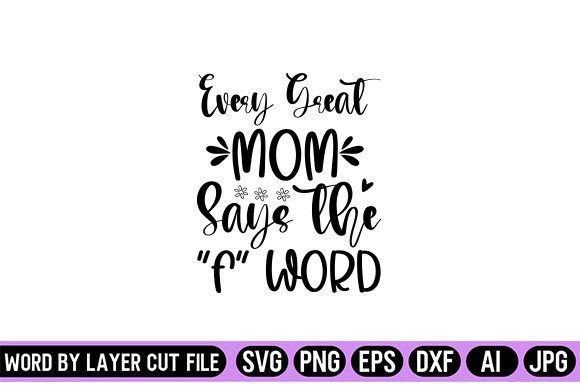
When an embroidery file lands on my desktop, my first question is always practical: where does this design truly belong? Looking at ‘Every Great Mom Says the F Word’, the immediate impression is a blend of cheeky humor and heartfelt recognition. It’s not just a phrase; it’s a statement with a specific, relatable mood. The layout suggests a focus on the text as the hero element, which for an embroidery designer means we’re working primarily with lettering. This isn’t a dense, intricate floral pattern; it’s a design whose personality is carried by its words and their visual weight.
The Natural Habitat for This Design
In my mind, this design instantly maps to a few very specific project types. I picture it on a cozy, well-made sweatshirt—a personal gift for a friend who’s deep in the trenches of parenting. It feels perfect for a custom tote bag for a mom, something functional she uses daily with a private smile. I also see it as a small, framed patch, perhaps on the strap of a diaper bag or sewn onto a kitchen apron. The theme is inherently personal and conversational, so it leans towards products meant for gifting or self-use, rather than broad, generic merchandise.
Considering the Stitched Outcome
Embroidery brings texture and dimension. How will ‘Every Great Mom Says the F Word’ translate into thread? On a mid-weight cotton tote or a fleece-backed sweatshirt, the satin stitches for the lettering should stand out cleanly. The design’s appeal will hinge on stitch clarity and color contrast. On a light fabric, a bold navy or black thread would make a strong statement. On a dark fabric, you’d need a bright, opaque thread like white or a vibrant pink to ensure the message pops. The mood is fun and affirming, so the finished product should look handmade and special, not mass-produced.
Real-World Application & Customer Reaction
Let’s walk through a scenario. Imagine you’re an Etsy seller preparing a batch of embroidered tea towels for a holiday market. You choose this design for a few limited-edition ‘Mom’ towels. Stitched in a warm coral thread on a natural linen towel, it becomes a boutique kitchen product. The customer reaction? It’s a niche product, but for the right buyer—someone looking for a gift with personality—it creates an instant connection. It feels more thoughtful than a generic ‘Happy Holidays’ motif. For a small shop, designs like this can help build a brand known for its relatable, human-centric voice.
However, its commercial use requires careful placement. This isn’t a design I would blanket across fifty baby onesies for wholesale. Its charm is in its specificity. It would resonate on a personalized pillow cover for a mother’s reading nook or embroidered onto a cap for a mom who enjoys a bit of irreverent humor. The value it adds to a handmade product is emotional resonance, which can significantly boost buyer engagement for craft businesses targeting a specific audience.
Where This Design Demands Extra Care
From a technical embroidery standpoint, any design centered on text requires attention to detail. For ‘Every Great Mom Says the F Word’, small hoop sizes could be a challenge if the lettering isn’t optimized for clarity at reduced dimensions. Stitching on textured fabrics like a thick sweater or a loosely woven blanket might require a heavier stabilizer to keep the lettering sharp. Stretchy fabrics, like t-shirts, demand careful hoop tension and appropriate stabilizer to prevent distortion in the satin stitches.
Tiny lettering details, if present, need inspection in the actual embroidery file. Always test on scrap fabric first. This is non-negotiable. You need to see the stitch density, check for any potential thread breaks in small corners, and ensure the fill stitches are smooth. Also, consider products that need frequent washing, like baby clothes or kitchen linens. A robust stitch density and quality thread will ensure the design lasts, maintaining that handmade presentation and customer trust.
Practical Notes for the Working Designer
Before you run this machine embroidery design on a final product, do your groundwork. Since the product description notes it’s an SVG file and an AI source file, you have vector assets, which is excellent for scaling. But the provided details don’t include exact stitch counts or specific hoop size recommendations. Therefore, you must check the file yourself in your software. Preview it at the size you intend to stitch.
- Test the design in both black and white mockups to judge contrast.
- Compare how it looks on light and dark fabric backgrounds digitally before committing thread.
- Use proper stabilizer for your chosen fabric—this is crucial for clean lettering.
- Review the licensing terms associated with the file. Confirm whether it’s cleared for commercial use if you’re selling finished products like embroidered patches or custom apparel.
- For digital product sellers creating printable mockups or using it as a design asset, the vector source file is a great advantage.
The ultimate goal is a finished product that looks professional and intentional. This design, when stitched well on a suitable item, can elevate a simple gift or a small shop product into something with a story. It speaks directly to an experience, making it a strong candidate for personalized gifts and niche craft business items. It reminds us that embroidery isn’t just decoration; it’s communication.
A Final Thought on Visual Personality
‘Every Great Mom Says the F Word’ as an embroidery design carries a confident, observant, and friendly tone. In a market saturated with generic graphics, designs with a clear voice stand out. For the creative entrepreneur, it’s about matching that voice to the right project. Stitch it onto something with substance, and it will reward you with a product that feels real, used, and loved—which is, after all, the point of a great handmade item.