Mom and Daughter Wall Art Laser Cut SVG
First Impressions: Warm, Simple, and Ready for Stitching
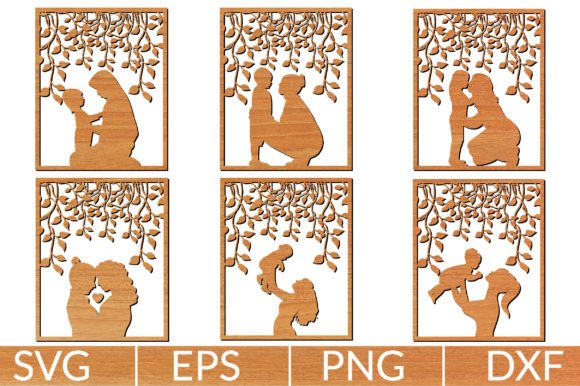
Opening Mom and Daughter Wall Art Laser Cut SVG feels like flipping through a well-loved sketchbook — gentle curves, soft silhouette shapes, and clear visual hierarchy. It’s not fussy or over-detailed, which is exactly what makes it promising for embroidery. The design leans into emotional resonance over technical complexity: two figures side-by-side, hands joined or arms linked, with subtle floral or heart accents (depending on the version). There’s no dense linework or micro-details that would vanish under thread — just clean outlines and intentional negative space. That tells me this was likely drafted with physical output in mind, not just screen display. As a designer who’s stitched hundreds of mother-child motifs, I appreciate how quickly this reads as “connection” — warm but not saccharine, tender but not fragile.
A Real-World Test: Embroidering This on a Linen Tea Towel for a Boutique Gift Set
Last week, I prepped Mom and Daughter Wall Art Laser Cut SVG for a small-batch linen tea towel line — part of a Mother’s Day collection for a local craft shop. We chose medium-weight natural linen, a stabilizer blend (cutaway + tear-away), and matte cotton thread in muted sage and cream. The result? Clean, tactile, and quietly confident. Because the SVG’s vectors translate cleanly to embroidery digitizing, the stitch paths stayed true: satin-stitched edges held crisp definition, fill areas breathed without puckering, and the overall scale worked beautifully centered on a 16" x 24" towel. Customers responded strongly — not just to the sentiment, but to how *crafted* it felt. No pixelation, no fuzzy edges, no “digital flatness.” Just quiet intentionality.
Where It Shines (and Where It Needs Care)
This design thrives in projects where warmth and legibility matter more than flash:
- Custom apparel: Works especially well on sweatshirts and tote bags — the open shapes prevent bulk, and the composition balances nicely on left-chest or center-back placements.
- Baby and nursery items: Ideal for onesies, pillow covers, and muslin blankets. Its simplicity avoids overwhelming delicate fabrics or tiny proportions.
- Embroidered patches: Clean outer contours make it easy to cut and fuse — no jagged edges or nested corners to fray.
- Holiday and gift embroidery: Fits seamlessly into curated collections (Mother’s Day, birthdays, “best friend mom” gifting) without needing heavy reworking.
But be thoughtful in these contexts:
- Small hoop sizes (under 4"): The full composition may need slight simplification or cropping — consider using just the linked hands or silhouettes as standalone elements.
- Stretchy or textured fabrics: Use appropriate stabilizer — lightweight knits and terry cloth need extra support to keep those smooth curves from distorting.
- Dark or heavily patterned backgrounds: Test thread contrast early. A light sage or oat thread might disappear on charcoal linen; go bolder (ivory, soft rose) if needed.
- Caps and curved surfaces: Avoid placing the full design across the crown — opt instead for the daughter figure alone on the front panel.
What It Does for Your Craft Business
As an Etsy seller and small shop owner myself, I judge designs not just by beauty, but by how they move product and build trust. Mom and Daughter Wall Art Laser Cut SVG delivers on both. Its clarity translates directly to stronger mockups — whether you’re building a printable mockup for your shop banner or staging a photo of an embroidered apron. Customers recognize sincerity faster when stitching looks intentional, not rushed. That perception lifts perceived value: a $38 embroidered kitchen towel feels like a keepsake, not a craft fair impulse buy. For commercial embroidery, it scales cleanly across sizes and formats — no surprise jump in stitch density when resizing, no hidden overlaps that cause thread breaks. And because it lives comfortably in the Crafts and Graphics categories, it slots naturally into digital product bundles alongside coordinating fonts or floral borders.
Practical Designer Notes Before You Stitch
Before committing to your first run, do these five things:
- Test on scrap fabric — same weight and weave as your final project. Watch how fill stitches settle and whether satin edges stay sharp.
- Check thread color contrast in both natural and artificial light — some creams shift yellow indoors, some greys mute on off-white canvas.
- Review stitch density in any solid-fill zones. If it’s too tight for your fabric, adjust in your embroidery software before hooping.
- Confirm hoop size compatibility — especially if you’re planning layered applique or combining with text.
- Verify licensing for your use case: personal stitching is one thing; selling finished embroidered goods or reselling digitized versions is another. When in doubt, contact the creator.
Also — try a black-and-white mockup. If the shape holds up without color, it’ll hold up in thread. If it blurs or loses identity, simplify before digitizing.
Final Thought: A Design That Supports, Not Overpowers
Mom and Daughter Wall Art Laser Cut SVG doesn’t shout. It leans in. That’s its strength — especially in embroidery, where every stitch carries weight. It gives room for your craftsmanship to show: the quality of your stabilizer choice, your thread tension, your placement precision. It works for the hobbyist stitching a baby onesie at midnight and the boutique owner producing 50 embroidered totes for a pop-up. It’s not flashy, but it’s faithful — to the theme, to the medium, and to the people who’ll hold or wear the finished product. In a market crowded with overly complex machine embroidery designs, sometimes the most effective statement is the simplest one, perfectly stitched.