My Mom is My Best Friend: A Designer's Embroidery Review
When a design file lands in my inbox, my first instinct isn't just to open it—it's to visualize it stitched. I picture it on a fabric, consider its thread paths, and judge its suitability for real, often demanding, embroidery projects. That’s the lens I’m applying to ‘My Mom is My Best Friend’, a digital design squarely aimed at the heartfelt craft market.
The First Impression: Warmth in a Simple Shape
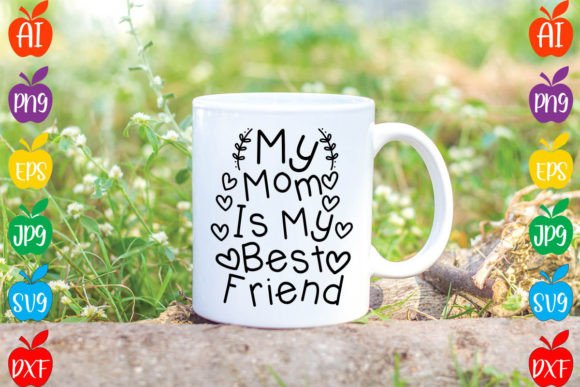
This design announces its purpose immediately. The phrase “My Mom is My Best Friend” sits as the clear, central motif. Its visual personality is gentle and straightforward, built for sentiment rather than intricate spectacle. The mood it creates is uncomplicated affection, perfect for gifts and personal wear. It feels like a design that belongs on a cozy sweatshirt sleeve, a kitchen towel hanging in a mom’s home, or a tote bag carried on a weekend visit. There’s a universality here; it’s not overly ornate, which means it can translate well into embroidery without losing its charm.
Where This Design Shines in Real Projects
Thinking practically, I see several strong applications. For custom apparel, this would be a lovely, subdued statement on a crewneck sweatshirt or a t-shirt, likely placed left chest or center. As a personalized gift, embroidered onto a linen pillow cover or a cotton apron, it carries a handmade sincerity that store-bought items lack. For small business owners, particularly Etsy sellers focusing on mother-daughter themes, nursery decor, or boutique baby items, this design could anchor a whole product line—think it on a baby blanket corner or a keepsake wall hanging.
It also holds potential as an embroidered patch. The relatively clean layout means it could be stitched onto a backing fabric and applied to caps or bags with good results. In terms of craft business utility, it’s a design that enhances product value through its emotional resonance, not just its technical complexity. Customers react to clear, heartfelt messages; this delivers that.
Navigating the Stitching Practicalities
Performance on actual fabric is key. On stable, medium-weight fabrics like cotton twill (for tote bags), canvas aprons, or standard quilting cotton (for pillow covers), this design should stitch out with clarity. The likely use of satin stitch for the lettering and perhaps a fill stitch for accompanying decorative elements needs mindful thread color contrast, especially on dark fabric backgrounds. A crisp white or a pastel pink on a navy blue sweatshirt could look stunning.
However, this is where an experienced embroidery designer’s notes come in. Always test on scrap fabric first. This is non-negotiable. You need to check the stitch density for your specific fabric—too dense on a thin tee might cause puckering; too sparse on a towel could look faint. Inspect the small details, particularly in the lettering. Ensure your hoop size can accommodate the design comfortably without needing to resize it drastically, which can distort proportions.
Considerations for Tricky Applications
There are scenarios where this design demands extra care. On highly textured fabrics like some blankets or looped towels, fine details might get lost. Stretchy fabric, like that of a standard t-shirt, requires excellent stabilizer and possibly a lighter density setting to maintain shape after wear and washing.
Curved surfaces like caps are a challenge for any text-based design. The layout needs to be assessed for distortion on a curved hoop. Furthermore, if the design includes any very small decorative accents or tiny lettering variations, they might not stitch cleanly on smaller hoop sizes intended for detailed work. For products destined for frequent washing—like kitchen towels or baby clothes—consider a robust thread and a secure stitch finish to ensure longevity.
The Impact on Your Work and Your Customer
Using a design like this affects more than just the stitchout. For your handmade presentation, it contributes to a cohesive, thematic collection if you’re building a brand around family or gifts. Its high giftability directly influences buyer engagement; people shopping for a Mother’s Day present will immediately recognize its application.
From a professionalism standpoint, a clean embroidery result from a well-prepared file builds customer trust. They see a crisp, readable message and associate that quality with your craft business. Whether you’re an apparel decorator adding it to a client’s order or a digital product seller including it in your portfolio for printable mockups, its success hinges on its execution.
A Designer's Final Preparation Checklist
Before you commit this design to a final project, especially for commercial embroidery or selling the finished product, run through these practical steps.
- Test stitch it on a fabric scrap identical to your final project fabric.
- Check thread color contrast against both light and dark fabric backgrounds. Create simple black and white mockups to see the shape clearly.
- Review the stitch density on your test piece—is it appropriate for your fabric weight and stretch?
- Confirm your machine’s hoop size can handle the design dimensions without compromise.
- Inspect the stitched small details. Are any corners or tight curves stitching cleanly?
- Use the proper stabilizer for your fabric type; don’t skip this step.
- Most crucially, check the provided license or terms of use. The product description notes it’s a digital download with multiple file formats (SVG, EPS, PNG, AI), but clarity on commercial use is essential. Confirm whether you can sell the physical embroidered items or if it’s for personal use only before listing any small shop merchandise.
‘My Mom is My Best Friend’ as an embroidery design file is a solid, emotion-driven asset. It belongs in the world of Crafts and Graphics meant to be made tangible. Its value isn’t in groundbreaking complexity, but in its clear, warm message and its adaptability to projects that matter to people. With careful preparation and an understanding of its best applications, it can become a reliable part of your embroidery project repertoire, whether for a one-time gift or a recurring product in your creative business.